

In 2014, when we sat down to write the investment thesis for a venture debt fund in India, there was no playbook to follow. The concept existed in the United States, where Silicon Valley Bank and Western Technology Investment had spent years lending to venture-backed companies alongside equity. India was different. Founders did not know the instrument. Institutional investors did not trust it. The frameworks for underwriting technology businesses through debt, calibrated not to collateral or cash flows but to the quality of a startup's investors, its growth trajectory, and the resilience of its team, had not been written.
We decided to write them.
"Venture debt in India was more concept than category," says Rahul. "We had to show founders it was not a distress tool. We had to show LPs the risk-return case was real. And we had to figure out, in real time, how to underwrite businesses that didn't look like anything traditional credit had seen before."
What followed was not a single breakthrough but ten years of compounding conviction. We have since invested close to INR 10,000 crore across more than 240 companies, raised over $725 million across our funds, and built a portfolio that spans 30 unicorns with a combined equity value exceeding $75 billion. Nine of our portfolio companies have reached the public markets. We started as two partners in a single office. We are now a team of 30 investment professionals across three cities.
But the numbers, large as they are, are not the story. The story is how we got there.
An Act of Persuasion
Rahul came to Trifecta Capital from venture equity, where he had spent years evaluating early-stage technology companies across India. He understood the anatomy of a founding team, and the difference between a company with momentum and a company that only appeared to have it. Nilesh brought the underwriting muscle: a background in structured finance and credit, and the discipline that comes with it. Together, we occupied a gap that neither pure equity investors nor traditional lenders could fill.
The first fund was, in the truest sense, an act of persuasion. We had to convince founders that taking on debt was not an admission of weakness but a tool for capital efficiency: a way to extend runway, reduce dilution, and buy time to reach the milestones that would justify a larger equity round at a better valuation. We had to convince LPs, initially domestic banks, insurance institutions, and endowments, that lending to venture-backed companies was a credible strategy.
We deployed the fund. We got repaid. We deployed again.
"Fund I proved the thesis," says Nilesh. "Fund II scaled it. By Fund III, venture debt had moved from the margins to the mainstream."
By Fund IV, the International Finance Corporation, a member of the World Bank Group, committed $25 million to Trifecta Capital. It was IFC's largest single investment in a venture debt fund across India and Southeast Asia. We had spent our early years explaining what we did to every room we walked into. Now the World Bank Group was investing in it.
Building Through Cycles
The decade was not a straight line.
Demonetisation in 2016 delivered a sudden liquidity shock to cash-dependent businesses. The IL&FS crisis of 2018 triggered credit contraction at precisely the moment many startups were counting on refinancing. COVID-19 froze revenue across entire sectors and made capital market access uncertain for months. The equity slowdown of 2022 and 2023 extended fundraising timelines and reset valuations across the ecosystem, putting immediate pressure on companies carrying debt.
Through each of these moments, our approach held. We underwrote carefully. We stayed consistent. And we showed up for founders when other sources of capital had retreated.
"During the defining phases of e-commerce in India, Trifecta Capital's support proved to be a stabilising factor amid intense competition," says Hari Menon, CEO and Co-Founder of bigbasket. "Their structured, founder-friendly approach to capital helped us, and many businesses like ours, at moments that truly mattered."
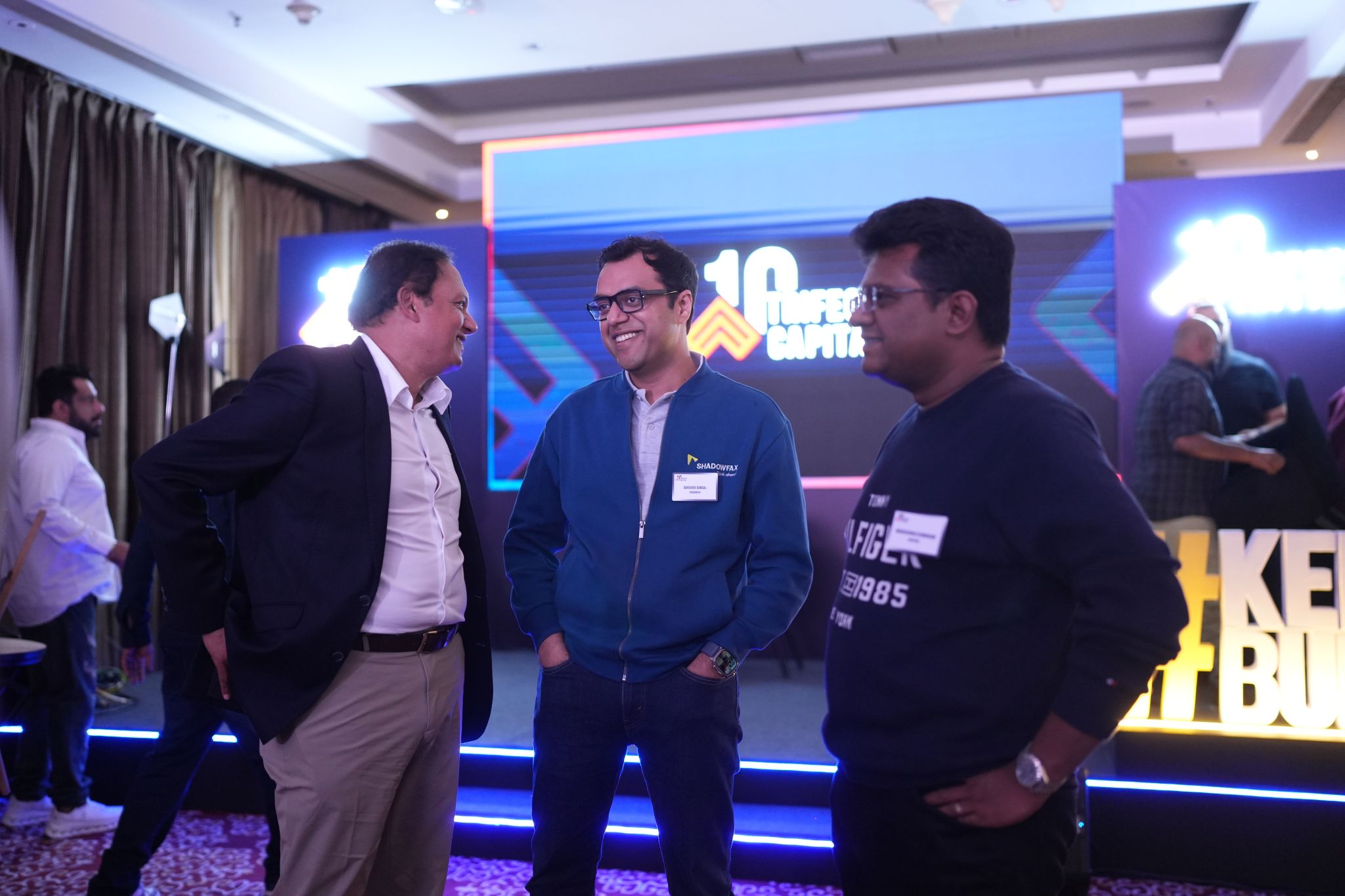
That consistency compounded into something beyond financial return. Founders who borrowed from us in their early years came back. Not because they had to, but because the relationship had earned their trust. "In an execution and operations heavy logistics business like ours, where flexible capital is essential, Trifecta Capital's support brought reliability when it mattered most," says Abhishek Bansal, CEO and Co-Founder of Shadowfax.
From Lender to Lifecycle Partner
By 2021, we had been watching our portfolio long enough to notice a pattern. The founders we had backed through debt were reaching a different kind of inflection point. They had proven their business models. They were generating real revenue. What they needed now was capital that would stay patient through the next phase of scaling. The equity market, at that moment, was not always supplying it.
So we launched our Growth Equity fund, deploying Rs. 1,570 crore into leading new economy companies. These were not cold bets on new names but informed convictions about teams we had known for years, founders whose discipline we had watched up close through difficult cycles.
Atomberg is one example. We first partnered with the company through venture debt in 2020, when it was scaling its BLDC fan business and needed capital to meet manufacturing demand. When Atomberg raised its Series C in 2023, we participated from the growth equity fund. "We first partnered with Trifecta Capital through venture debt, and as the business evolved, that partnership expanded into growth equity as well," says Sibabrata Das, Co-Founder of Atomberg. "Having the same partner across phases brought continuity and perspective as the company scaled."
The same year, we launched our Financial Solutions business, now advising on over Rs. 4,000 crore in assets, helping founders manage treasury, liquidity, and capital strategy with the same rigour we applied to their financing.
What started as a venture debt provider had become something different: a lifecycle investment platform operating across five funds and three business verticals, present at every stage from early debt to growth equity to financial advisory.
A Portfolio That Endures
ixigo went public and became one of India's most trusted travel platforms. "Trifecta Capital stepped in at that critical juncture," says Aloke Bajpai, MD and Group CEO of ixigo, reflecting on our support during the post-pandemic recovery that set the foundation for their IPO. Urban Company turned home services from an informal, fragmented industry into a structured, tech-enabled institution. Meesho brought commerce to Bharat, connecting over 230 million consumers with 700,000 sellers. Shadowfax built India's leading last-mile logistics network. Nine portfolio companies have reached the public markets, with more on the path.
More than half of our portfolio is in sectors with direct social impact: healthcare, financial inclusion, clean energy and mobility, sustainable agriculture, and education. Over Rs. 3,400 crore has been deployed across these categories.
Read as a whole, the portfolio is a cross-section of what India's new economy has become. Companies that started as early-stage disruptors are now market leaders. Categories that barely existed in 2015 are now essential infrastructure. We are proud to have been present, and stayed present, through that transformation.
The Decade Ahead
In 2015, India had roughly 350 million internet users, around 4,000 startups, and a $2 trillion economy. Today it is approaching one billion internet users, a $5 trillion economy, and a startup ecosystem of far greater depth. Venture-backed companies have generated over $160 billion in public market value.
Our journey runs parallel to that arc. We helped shape how capital was structured and delivered within it, introducing a financing instrument that is now a standard part of every serious startup's toolkit, and building the track record that brought sophisticated global capital into a market that had not previously attracted it.
The venture debt market in India is projected to reach $6 to $7 billion by 2030, an eightfold expansion from just a few years ago. The growth equity opportunity is deepening. The advisory needs of scaling founders are growing more complex. We sit at the intersection of all three, with a decade of institutional memory behind every decision.
"We did not set out to build a category," says Rahul. "We set out to be useful to founders at a moment when other capital wasn't. The category followed from that."
Ten years in, we are not looking back with nostalgia. We are looking forward with the clarity that comes from having done something difficult, consistently, for a long time. India's most ambitious founders are building the companies that will define the next decade. We intend to be their partner for all of it.