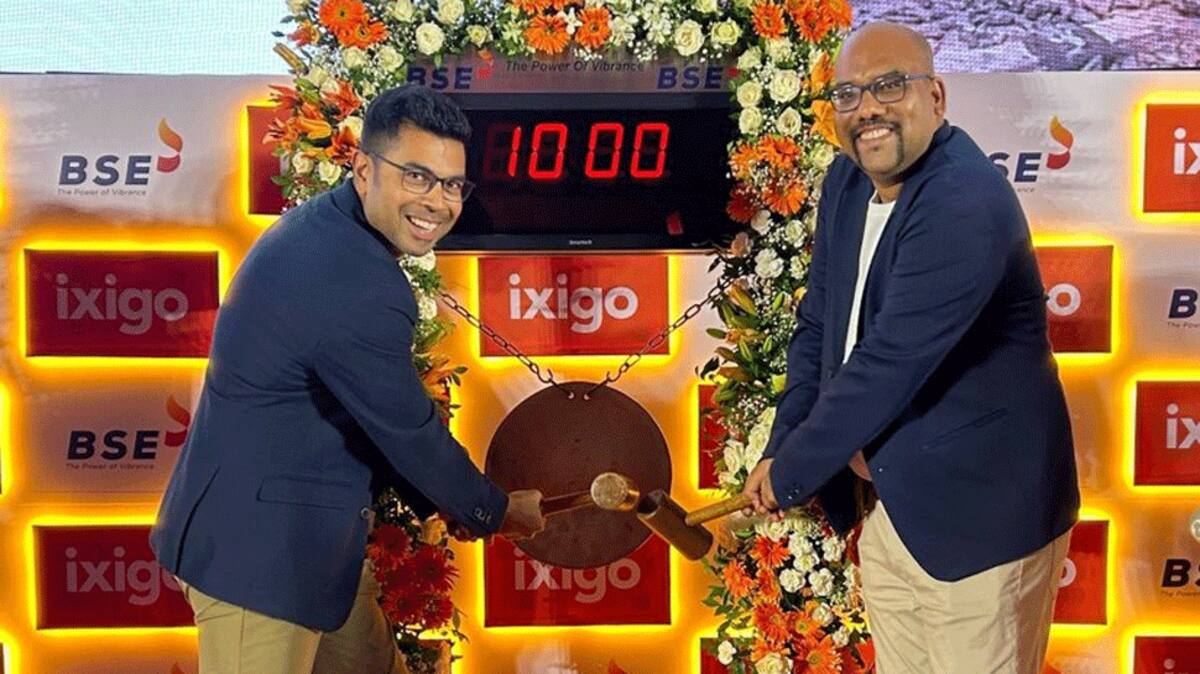


In early 2008, a cheque ixigo wrote for a ₹10,000 printer bill bounced.
The company was barely a year old. Aloke Bajpai and Rajnish Kumar, batchmates from IIT Kanpur who had worked together at the travel technology giant Amadeus in France, had come back to India in 2006 with an ambition they now laugh about: to disrupt Amadeus itself. They settled for something more useful. India's online travel market was a maze of low-cost carriers, half a dozen booking sites, unreliable schedules, and opaque pricing. Indians are deal hunters by nature, they reasoned. Build the one place where every fare can be compared, and travellers will come.
Travellers did. Funding did not. The founders spent over a year unable to raise money, and when a $500,000 seed cheque from Singapore finally arrived in February 2008, the relief lasted months. Lehman Brothers collapsed, and the Series A that was due to close fell through a week before the money was to hit the bank. ixigo was left with three to four months of runway. The company's 25 employees volunteered to take pay cuts. The team stayed.
Surviving became something of a habit. It also taught the founders the discipline that would later define the company: spend like the money might not come, because sometimes it doesn't.
The Train-First Bet
Every online travel company in India followed the same template, imported from the West: flights first, hotels second. The economics made sense. Flight bookings carried commissions, and flyers had money to spend.
Aloke and Rajnish noticed what the template ignored: 96% of Indians don't fly. The backbone of Indian mobility was, and remains, the railways. Tens of millions of people navigating waitlists, delays, and platform changes every day, with almost no digital tools built for them.
So in 2014, ixigo went where the commissions weren't. It launched a train app and spent the next four years building utility features with no monetisation at all. Machine learning models that predicted whether a waitlisted ticket would be confirmed. A crowdsourced train running status system that used cell tower IDs to track trains in areas where GPS and internet failed along the tracks. Seat availability alerts. Delay notifications.
None of it made money. All of it made trust. ixigo Trains became one of the most downloaded travel apps in the country, and for millions of travellers in Tier 2 and Tier 3 India, it was the first digital travel tool that actually worked for the journeys they took. By the time ixigo began monetising, it was not acquiring customers. It was serving people who already relied on it.
From Trains to Everything
The train wedge opened into a multi-modal strategy. In 2021, ixigo acquired Confirmtkt, a train booking and prediction platform, and AbhiBus, one of India's leading bus ticketing services. Flights, trains, buses, and hotels now sat in a single ecosystem, serving travellers across every price point and mode of transport.
What distinguished the company through this expansion was capital efficiency. ixigo built with a team of under 200 for most of its life, used AI across everything from fare prediction to automated customer service, and prioritised profitability long before the market demanded it. The pandemic, which froze travel revenue entirely, became another survival test the company passed. It used the period to automate operations and launch products like ixigo Assured, built around the flexibility travellers suddenly needed. Trifecta Capital partnered with ixigo through venture debt during this period, supporting the post-pandemic recovery that set the foundation for what came next.
"Trifecta Capital stepped in at that critical juncture," says Aloke Bajpai, MD and Group CEO.
The IPO
In June 2024, Le Travenues Technology, ixigo's parent company, went public. The ₹740 crore IPO was subscribed 98 times. Institutional investors subscribed their portion 107 times. The stock listed at ₹138 on the NSE, a 48% premium to the issue price, and surged 78% during the trading day.
For a company that once bounced a printer cheque, the symmetry is hard to miss. The market that ixigo had to survive for seventeen years was now competing to own a piece of it.
The numbers behind the demand were straightforward. ixigo had become India's second largest OTA by revenue and the leading travel platform for the next billion users, the value-conscious travellers of Tier 2 and Tier 3 India whom the flights-first template had overlooked. In FY24, the company posted revenue of ₹655 crore with a net profit of ₹73 crore. Profitable growth, built on a segment everyone else had deprioritised.
Seventeen Years in the Making
Seventeen years separate the founding of ixigo from its listing. Most of that time was spent doing things that did not look like progress: surviving funding winters, building free tools for train travellers, refusing to burn capital for growth the business could not sustain.
That is the story worth telling. Not that ixigo found a clever wedge, but that it had the patience to stand by an unfashionable insight for a decade while the market caught up. The 96% who don't fly were always the larger opportunity. ixigo was simply the company willing to wait for it.
Trifecta Capital is proud to have partnered with ixigo through venture debt and growth equity on this journey. Congratulations to Aloke, Rajnish, and the entire ixigo team. Few companies earn their IPO the way this one did.