


A New Milestone for Venture Debt in India
In 2015, we spent a lot of time explaining what venture debt was.
Not pitching it. Explaining it. To founders who assumed debt meant collateral and personal guarantees. To institutional investors who wanted to know why anyone would lend to a loss-making company. To an ecosystem that had exactly two financing options, equity or nothing, and had stopped questioning whether that was enough.
Our first fund launched that year with an anchor commitment of INR 50 crore from RBL Bank. One anchor. One conviction: that India's best founders were giving away ownership they did not need to give away, at valuations that would look painfully cheap within three years, because no better instrument existed. We wanted to build that instrument. Not to compete with equity, but to give founders a genuine choice.
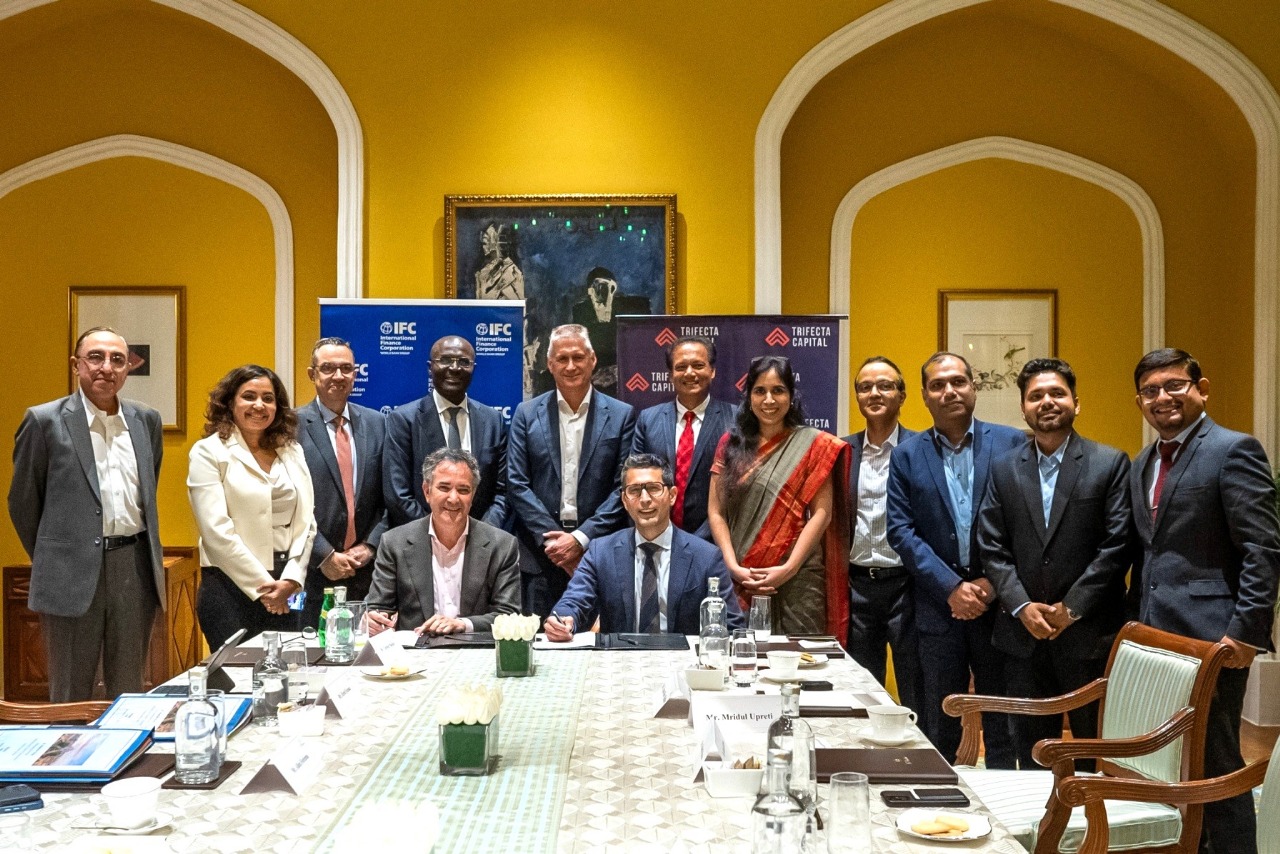
Ten years later, the International Finance Corporation, a member of the World Bank Group, has committed up to $25 million to Trifecta Venture Debt Fund IV. It is the largest investment IFC has ever made in a venture debt fund in India and South East Asia.
We have been sitting with that sentence for a few days now. It is worth unpacking why it matters.
A Decade-Long Argument
Every deal we did in the early years was also an argument. That venture debt works in India. That founders benefit from it. That you can underwrite growth-stage companies with discipline, and do it again, and again, across cycles. Not a niche product for a handful of late-stage companies, but a foundational financing instrument for the entire ecosystem.
The argument took a decade to win. Here is what the evidence looks like now: over $1.18 billion deployed across 220+ companies, including 30+ unicorns, with a combined portfolio equity value of $75 billion. Over $725 million raised across four venture debt funds and one growth equity fund. Credit costs below 0.8%. Zero capital loss for any LP, ever.
We are proud of those numbers, but we will be honest about what we are proudest of. It is the portfolio itself. BigBasket and Zepto. Meesho and Shadowfax. Cars24, CarDekho, Atomberg, Jai Kisan, Euler Motors. Read that list and you are reading the story of India's new economy. More than half of it is impact-driven, spanning healthcare, financial inclusion, clean energy and mobility, sustainable agriculture, and education, with over INR 3,400 crore deployed in these sectors. We have said this before and we will keep saying it: in a country like ours, investing in the new economy and investing in impact are the same act.
Why IFC Chose Venture Debt
Development finance institutions do not move quickly, and they do not move casually. IFC's diligence is famously thorough. So when the institution that exists to mobilize private capital for development makes its largest-ever regional commitment to a venture debt fund, it is telling the market something specific.
Here is what we think it is telling the market. India's venture debt industry has grown at a 58% CAGR since 2018 and crossed $1.38 billion in 2025. And yet it remains roughly 10% of total VC flow into Indian startups. In the United States and Europe, that figure is 20 to 30%. The gap is not a shortage of good companies. It is a shortage of institutional confidence in the instrument. IFC's commitment is designed to close that confidence gap, to show global institutional investors that Indian venture debt is a credible, disciplined, investable asset class.
Farid Fezoua, IFC's Global Director for Disruptive Technologies, Services and Funds, put their rationale simply: "Providing more funding options to innovative startups, including flexible, cost-effective mechanisms like venture debt, is essential for India's economic growth and job creation."
We could not have written a better summary of why we started this firm.
For Founders, Specifically
If you are a founder, here is the practical version.
You have just closed your Series B. You need capital for working capital, for inventory, for the eighteen months of runway between here and the metrics that justify your next round. Your options today are to dilute again, at a valuation you are still growing into, or to find debt, which banks will not give you without collateral you do not have.
Venture debt exists for exactly this moment. A term loan, typically 18 to 36 months, with a small warrant that gives the lender limited upside. Your ownership stays intact. Your valuation stays unmarked. Your next equity round happens when your numbers are ready, not when your bank balance forces it.
Fund IV will back more than 100 companies at Series A and beyond, with focus on electric vehicles, financial services, deep technology, climate and sustainability, and healthcare. These are the sectors where we have spent ten years learning how to underwrite well. That learning was expensive. It is also why our LPs have never lost a rupee.
The Next Ten Years
A milestone like this one invites looking backward. We are more interested in looking forward.
India's startup ecosystem has created over 1.6 million jobs. Its companies are building the infrastructure for healthcare access, financial inclusion, and climate resilience at a scale few countries can match. The founders doing this work deserve a capital ecosystem as ambitious as they are. IFC's partnership deepens our ability to provide it, and reinforces a conviction we share: that capital deployed with purpose and discipline does more than generate returns. It shapes what gets built. Not just for investors, but for the founders, the customers, and the communities their companies serve.
To every LP, founder, VC partner, and stakeholder who has been on this journey with us over the past decade: this milestone belongs to all of you. Ten years ago we were explaining what venture debt was. Today the World Bank Group is investing in it.
We look forward to working closely with IFC to achieve even greater impact going forward.